Licerion® Strike

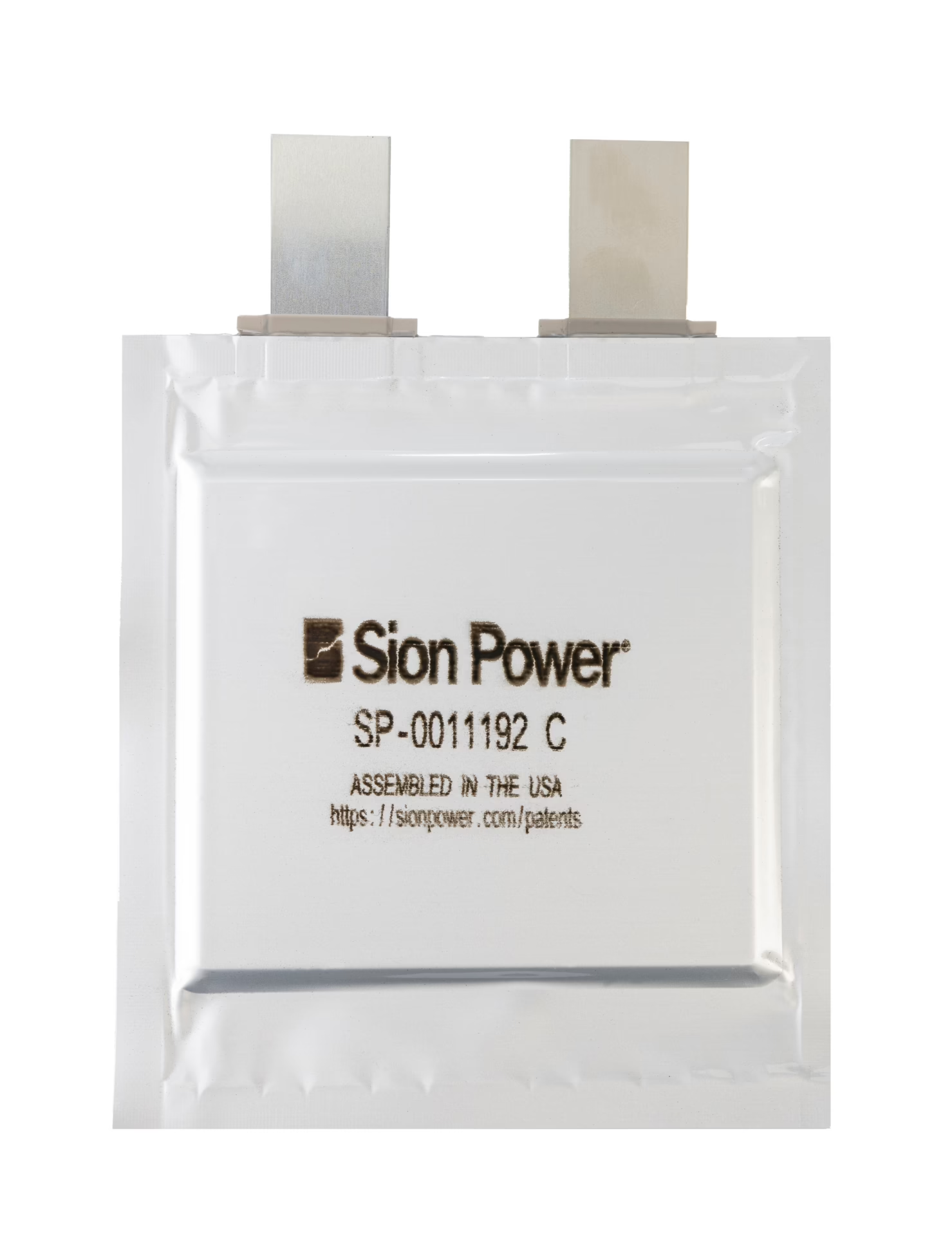
High-power, lightweight cells optimized for rapid deployment and aggressive maneuver profiles. Up to 473 Wh/kg.

SpecST-20ST-30
Capacity (Ah)2030
Voltage3.8V3.8V
Specific Energy
(Wh/kg)
473500
Power Density28002500
Weight (g)165190
Max Discharge6C6C
AvailabilityQ3 2026Q4 2026

Licerion® Echo

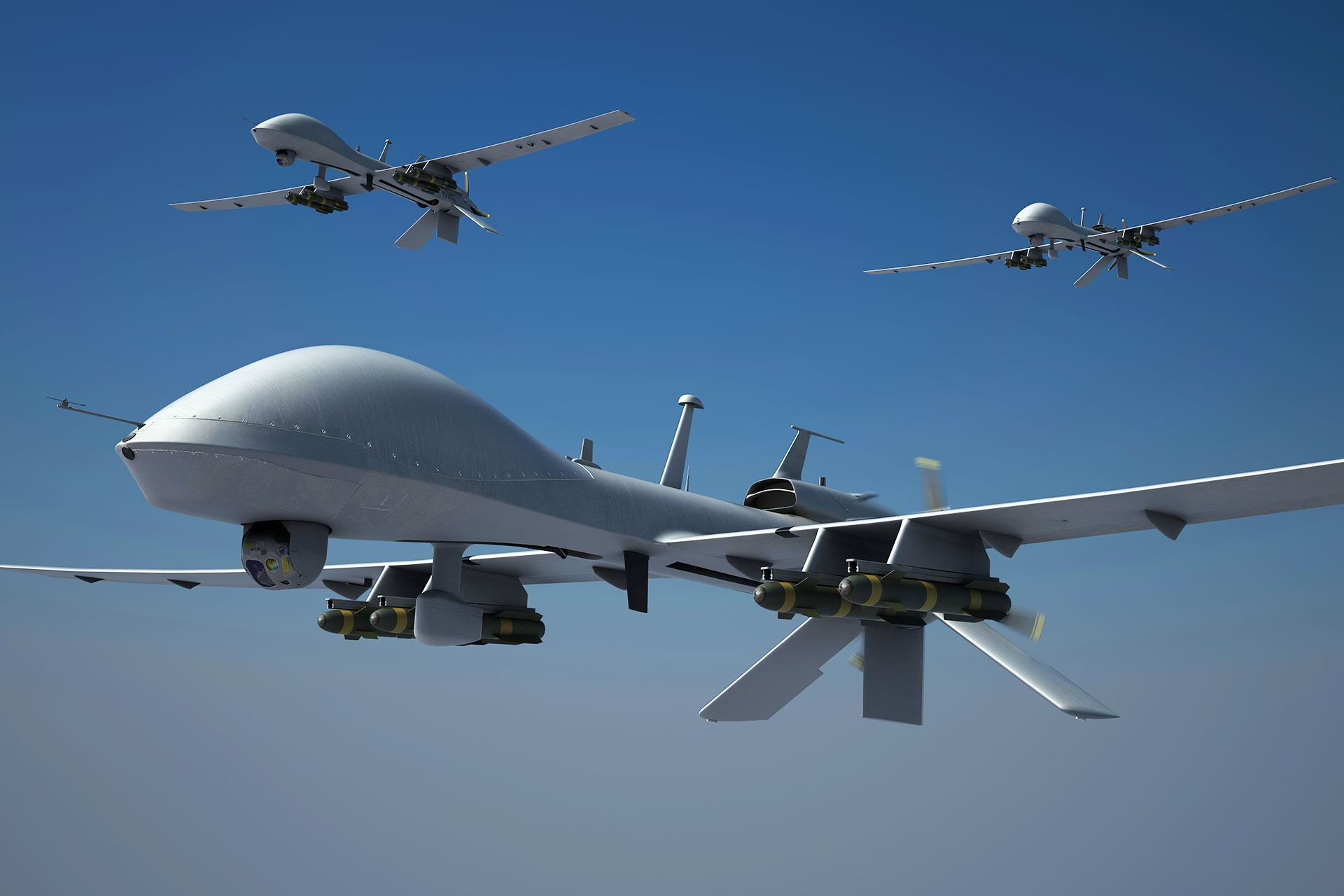
Maximum energy density for extended-endurance ISR and strike missions. Up to 510 Wh/kg — battlefield superiority.

SpecST-20ST-30
Capacity (Ah)2030
Voltage3.8V3.8V
Specific Energy
(Wh/kg)
Power Density33003000
Weight (g)165190
Max Discharge6C6C
AvailabilityQ3 2027Q4 2027

Applications

Long-Endurance ISR

Extend mission duration for critical ISR operations, enabling persistent observation and data collection over extended periods without compromise.
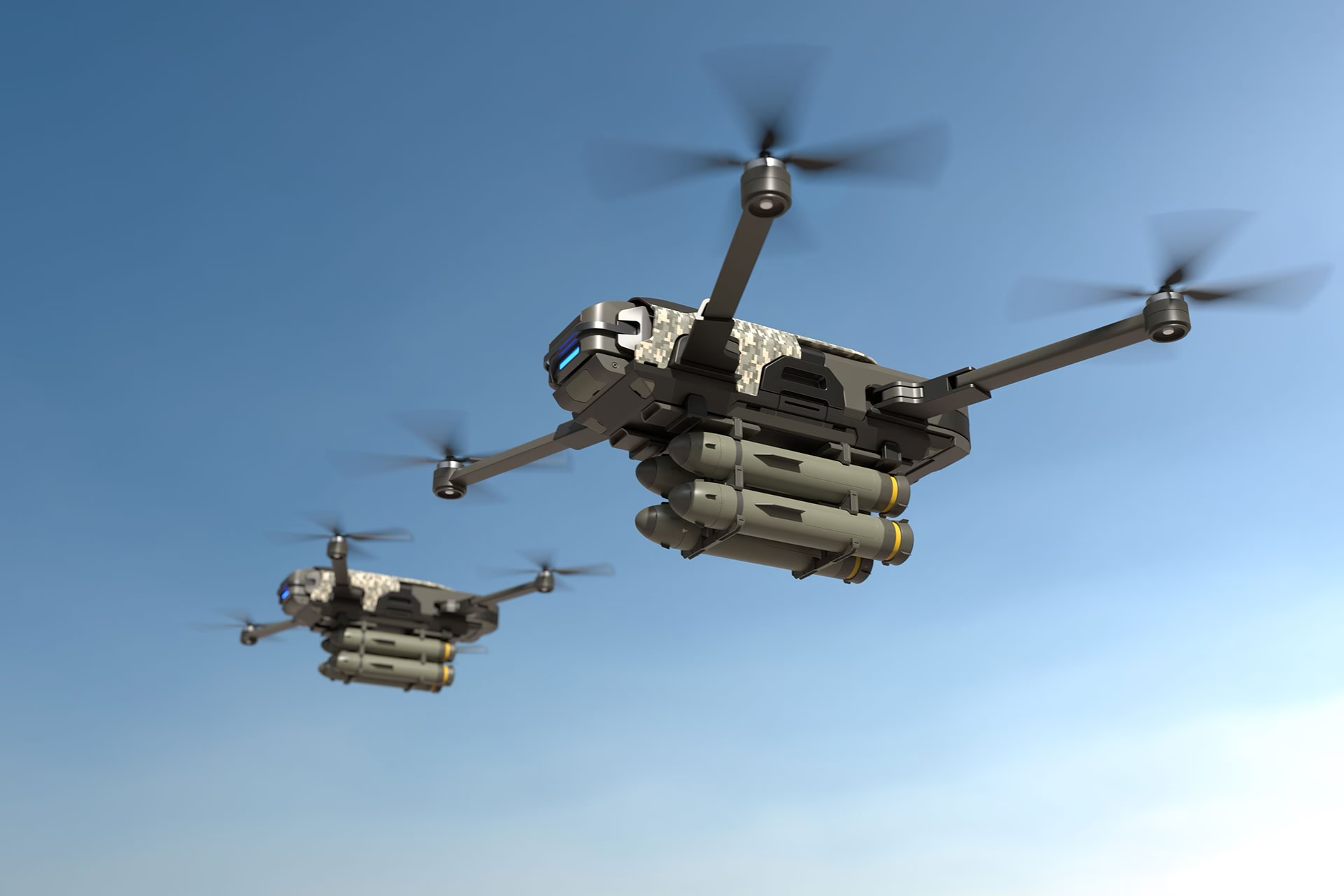
Tactical Strike & Reconnaissance

Extend mission duration for critical ISR operations, enabling persistent observation and data collection over extended periods without compromise.
Logistics & Resupply

Facilitate efficient delivery of vital supplies and equipment to forward operating bases, reducing logistical footprints and increasing operational flexibility.

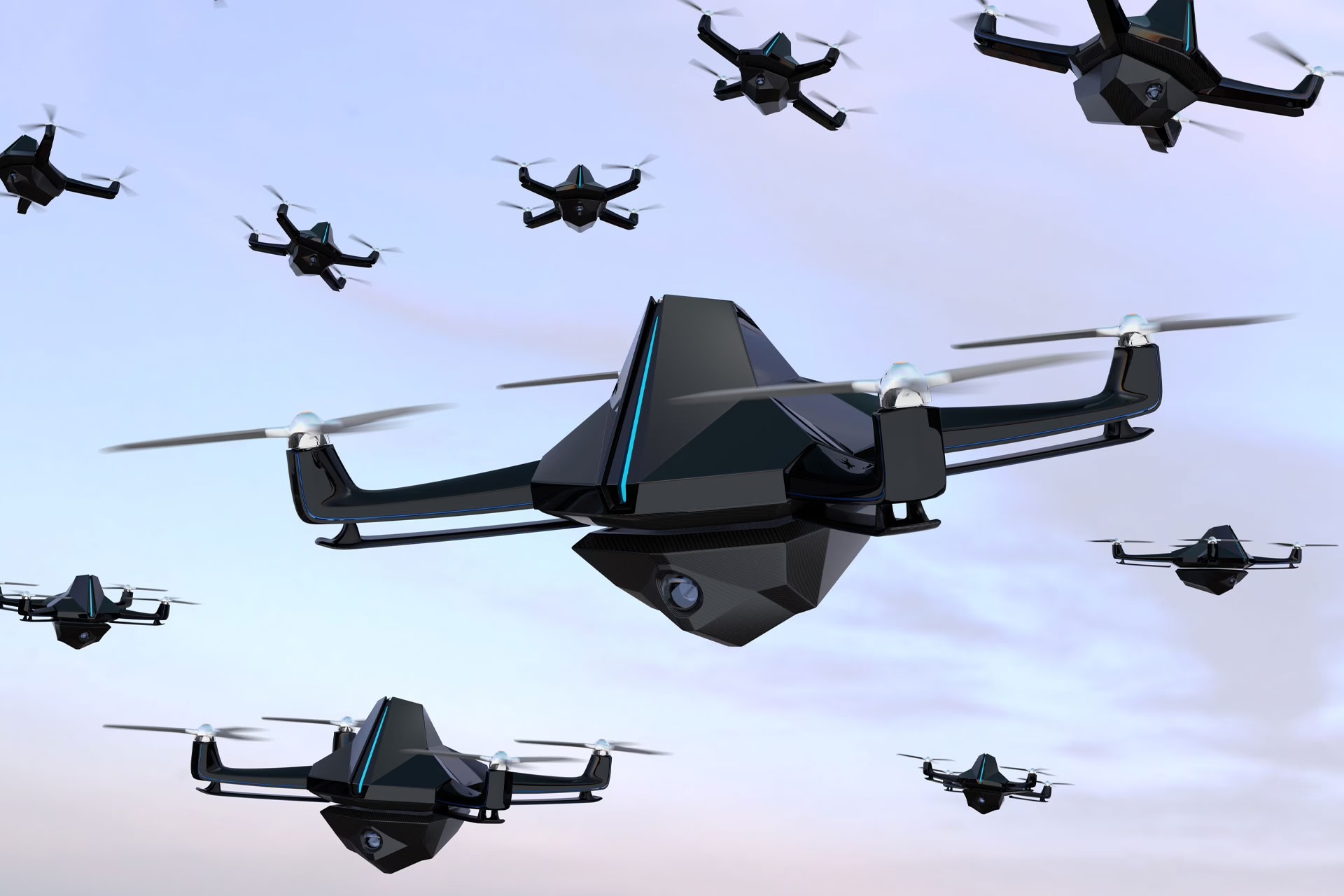
Advanced Swarm Operations

Enable the development of next-generation drone swarm capabilities, providing the energy density required for complex, synchronized autonomous missions.
Fly further with US-made High-Performance Military Standard Battery Packs

MIL-STD 461G

EMI shielding, trace outing, and grounding for MIL-STF-4GI systems


MIL-STD 810H

Designs proven in shock, vibration, temperature, dust, and humidity


7
Core UAS
7
Adjacent
2
Energy


       I-10 I-17  PHOENIX METRO TUCSON NORTHERN AZ WESTERN AZ  PHOENIX  TUCSON  FLAGSTAFF  YUMA     HONEYWELL Phoenix  AEROVIRONMENT Peoria  KRATOS Phoenix area   PHOENIX DEFENSE  L3HARRIS Tempe  GEN. DYNAMICS Scottsdale  BOEING Mesa  ANDURIL Chandler  NORTHROP Chandler   28 GORILLA Chandler  LGES Queen Creek  GA-ASI Pinal Airpark, Marana  SION POWER Tucson  RAYTHEON Tucson  CORE DRONE / UAS DRONE-ADJACENT DEFENSE ENERGY – – – Interstate highway (approx.)  N  ~ 100 mi

Arizona Defense & Drone Ecosystem · 16 Companies · Phoenix–Tucson Corridor
Marker positions are approximate. Some companies have multiple AZ facilities.

Core Drone & UAS
7
General Atomics (GA-ASI)
Pinal Airpark, Marana
Kratos Unmanned Systems
Phoenix area
AeroVironment
Peoria area
Anduril Industries
Chandler (AZ ops)
Dedrone
Phoenix
Red Six (SPA Company)
East Valley
SpektreWorks
Scottsdale
Knightwerx
Scottsdale (AZ ops)
28 Gorilla
Chandler

Drone-Adjacent Defense
7
Boeing
Mesa
Raytheon (RTX)
Tucson
Northrop Grumman
Chandler
Honeywell Aerospace
Phoenix
General Dynamics Mission Systems
Scottsdale
L3Harris Technologies
Tempe
Phoenix Defense
Scottsdale / Phoenix

Defense Energy & Power
2
Sion Power
Tucson
LG Energy Solution (LGES)
Queen Creek


Q&A

A conversation with Sion Power’s Chief Science Officer, Tracy Kelley

A: Lithium-ion has hit a practical energy ceiling of around 300–350 Wh/kg, even with the latest silicon anode enhancements.

That ceiling directly constrains what unmanned systems can do. Every gram of battery weight is a gram that can’t be payload, sensor, or fuel. For a drone designed for long-range surveillance or as a loitering munition, the battery determines how far it can fly, how long it can stay on target, and how much it can carry. Modern defense platforms increasingly demand longer endurance, greater maneuverability, and higher payload capacity — and lithium-ion simply can’t deliver the step-change in energy density those requirements need.

A: The difference comes down to the anode. Lithium-ion uses a graphite anode — graphite is a heavy host material that stores lithium ions but adds weight without contributing energy. Lithium-metal replaces graphite with a metallic lithium anode.

Lithium metal stores far more energy per unit of weight, which is why our Licerion cells reach energy densities exceeding 500 Wh/kg, compared to roughly 300–350 Wh/kg for today’s best lithium-ion. That gap of up to 200 Wh/kg is the difference between a two-hour mission and a five-hour mission, or between carrying a small sensor payload and a meaningful one.

A: The core challenge is that metallic lithium is chemically aggressive. 

During charge and discharge cycles, it tends to form dendrites – tiny, needle-like structures that can grow across the cell and cause failures or safety issues. It also reacts with the electrolyte, degrading performance over time. 

Sion Power has spent over a decade solving these materials science problems: developing electrolyte formulations, protective coatings, and cell architectures that make lithium-metal reliable, manufacturable and certifiable. That work is what separates a promising lab result from a product you can actually integrate into a defense program.

A: Both use the same cell chemistry but different pack integration and are optimized for different mission profiles. 

Strike is built for high-power applications: loitering munitions, tube-launched ISR assets, and high-speed reconnaissance drones. It supports a 6C continuous discharge rate, which means it delivers very high power very quickly without thermal derating — critical for aggressive maneuvering or a high-power terminal phase. Strike cells will be available beginning Q3 2026. 

Echo is our highest-energy-density platform at up to 510 Wh/kg, designed for missions where loiter time and range are the primary constraints — fixed-wing ISR, high-altitude long-endurance platforms, maritime surveillance, autonomous swarm elements. Echo is targeted for Q2 2027.

A: It means a platform designed around Licerion cells can loiter, fly, or operate significantly longer on the same battery weight — or carry the same energy in a much lighter, smaller pack.

For a fixed-wing ISR drone, that might mean extending a four-hour mission to ten or twelve hours. For a loitering munition, it could mean a dramatically extended range or a longer time-on-target. For a logistics drone, it enables heavier payloads and longer delivery routes. By combining high-energy lithium-metal chemistry with advanced battery pack engineering, defense integrators can unlock two to three times increases in mission endurance, significantly extended operational range, and dramatically higher payload capacity compared with conventional lithium-ion and lithium-polymer batteries used in today’s unmanned systems.

A: Licerion cells meet all defense procurement, transportation, and environmental standards required for program-of-record integration.

Licerion cells are NDAA Section 848-compliant with no foreign-sourced battery components, DFARS-compliant with full domestic supply chain traceability, UN38.3-certified for transportation, and MIL-STD-qualified for defense environment requirements. We manufacture in our 110,000-square-foot facility in Tucson, Arizona,  the same facility where we prototype, demonstrate, and scale production for defense and aerospace partners. Supply chain security is a national security issue, and domestic manufacturing isn’t just a checkbox for us, it’s a genuine capability advantage for integrators who need a secure, traceable supply chain.

A: The right time to engage is before you’ve locked in your battery architecture — energy density assumptions drive airframe design, payload allocation, and mission planning from the ground up.

We can demonstrate Licerion cells and integrated battery systems today. Licerion Strike is available beginning Q3 2026; Licerion Echo is targeted for Q2 2027. If you design a platform around 300 Wh/kg and then switch to 510 Wh/kg, you fundamentally change what the platform can do. The earlier we are in the conversation, the more value we can deliver to the program.